Most children tend to be picky about food. It’s what I’ve noticed being a mother and now an aunt. It was my experience as a child, and one of the foods I did not accept was the nopal, or cactus pad. It was sour-ish, slimy, and too vegetable-y. My mom usually made it into a salad. It wasn’t until I married my husband that I learned that it could be made in other ways. Then, I started liking it.
With my husband, I learned to grill it, add it to salsa verde with pork, sauteé it with mushrooms and onion, and improve the nopal salad with avocado.
This past month, I learned that the nopal is food, not only to us, but to a special and powerful tiny bug: the cochinilla, or cochineal.
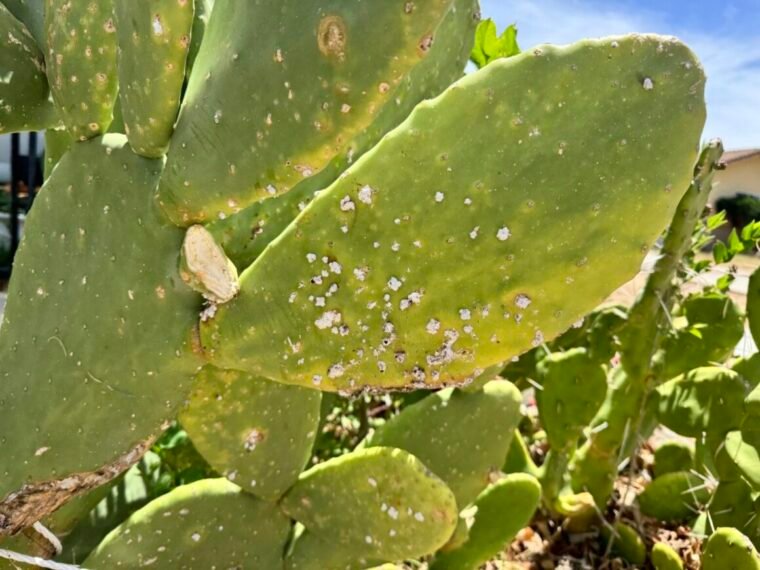
These are white and furry and live on top of the nopal, feeding on it. A white-covered nopal is considered infected. BUT, if you know about the bug, you can make the most natural, powerful red dye out of it.
Grana cochinilla, as it is called in Spanish, was called nocheztliis by the Mexica (Aztec). However, hundreds of years before the Mexica, the Zapotec and Mixtec called it kuitsí and ndukun, respectively. Its scientific name is Dactylopius coccus.
Cochinilla, when squished, releases a deep red blood that maintains its intensity even after the bug is dead and dry (sounds ghorry, I know, but it’s how this works). Collecting these bugs takes a lot of care, as they are easily squished. However, with just a handful, you’ve got enough to start.
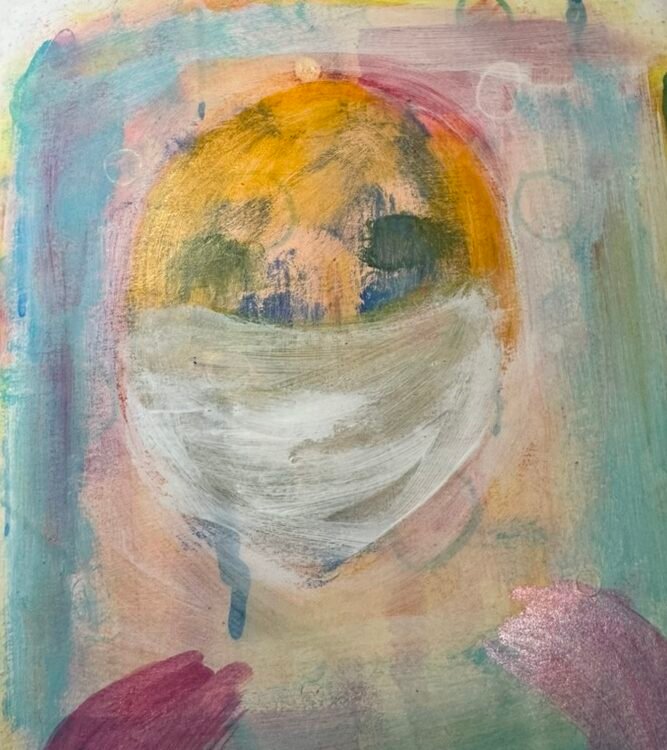
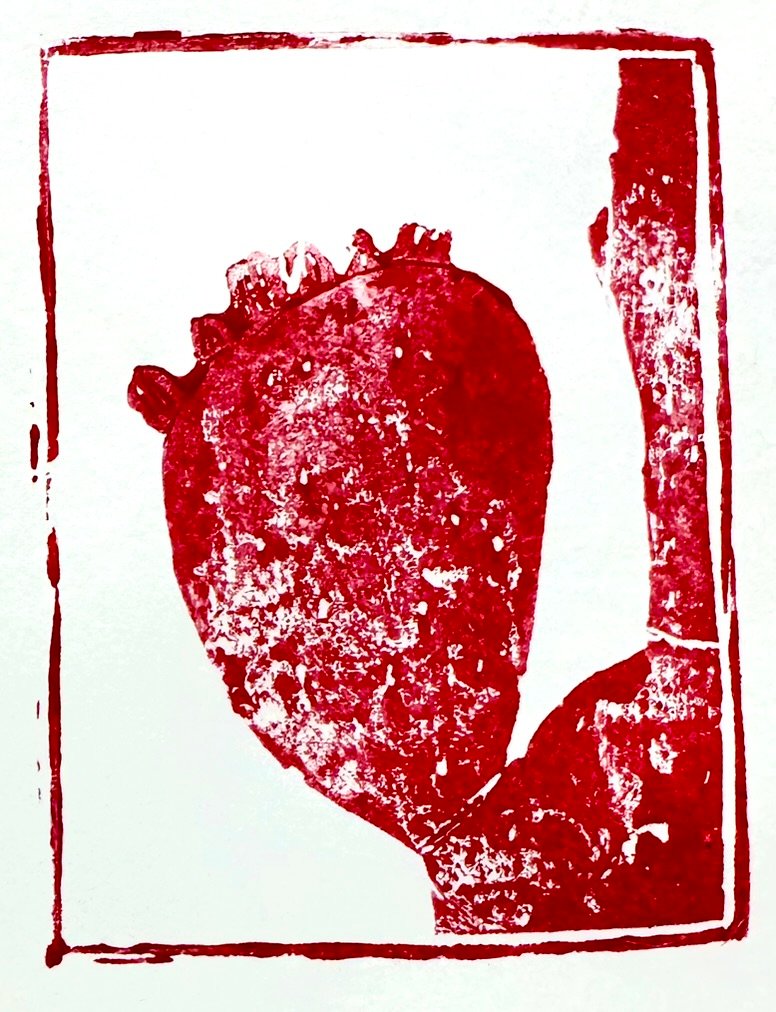
I made some ink this week and made this pretty test painting. I think the red could be deeper, so I will give it another try. These are mistakes I plan to correct:
- Set them out in the sun, but protect them from the wind
- Move them more often during the drying period
- After about 3 days, finish drying them in the oven
- The temperature should be at less than 200 degrees, and for only 2 minutes at a time.
This batch I made took me WEEKS to dry! When I got desperate, waiting and waiting, I put them in the oven. By then, several bugs had been lost with the wind or during the pecking of curious birds.
In the oven, I set the temperature a little too high and for a little too long, considering that some were already dry and probably didn’t need the help.
When I took them out of the oven, I could see that some had burned. But I was still excited and continued with the process: crushing, boiling, and straining. I’m no scientist, but my instinct tells me that the burned ones lost their color, which means the dye I produced is not as intense as it could have been.
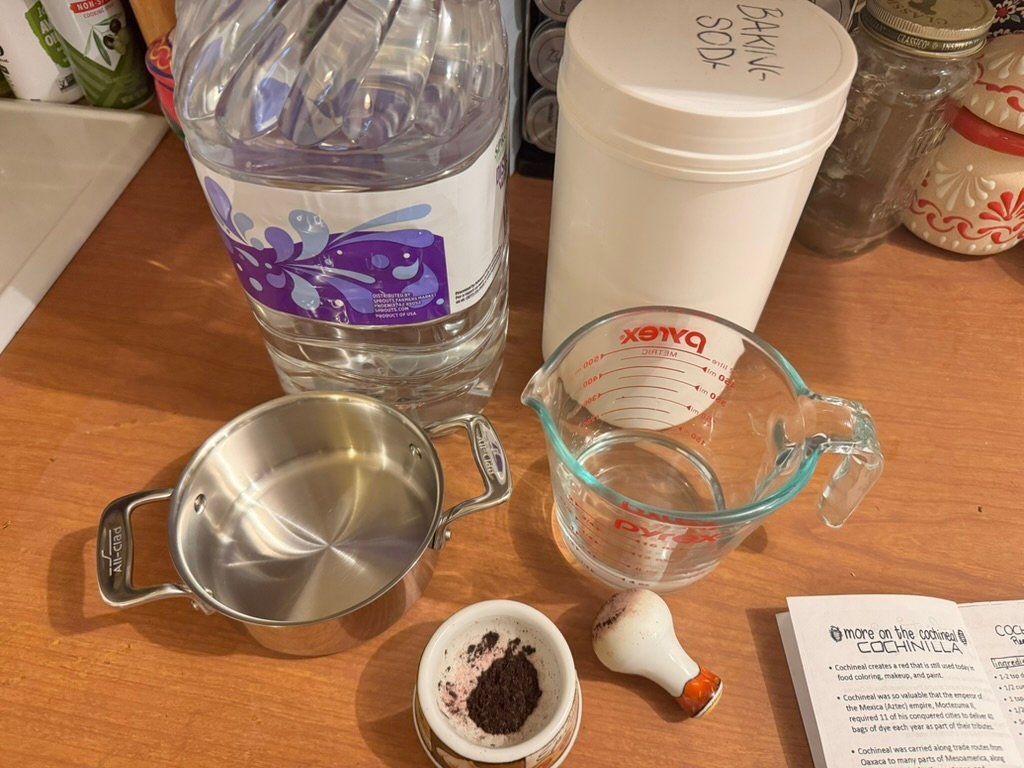
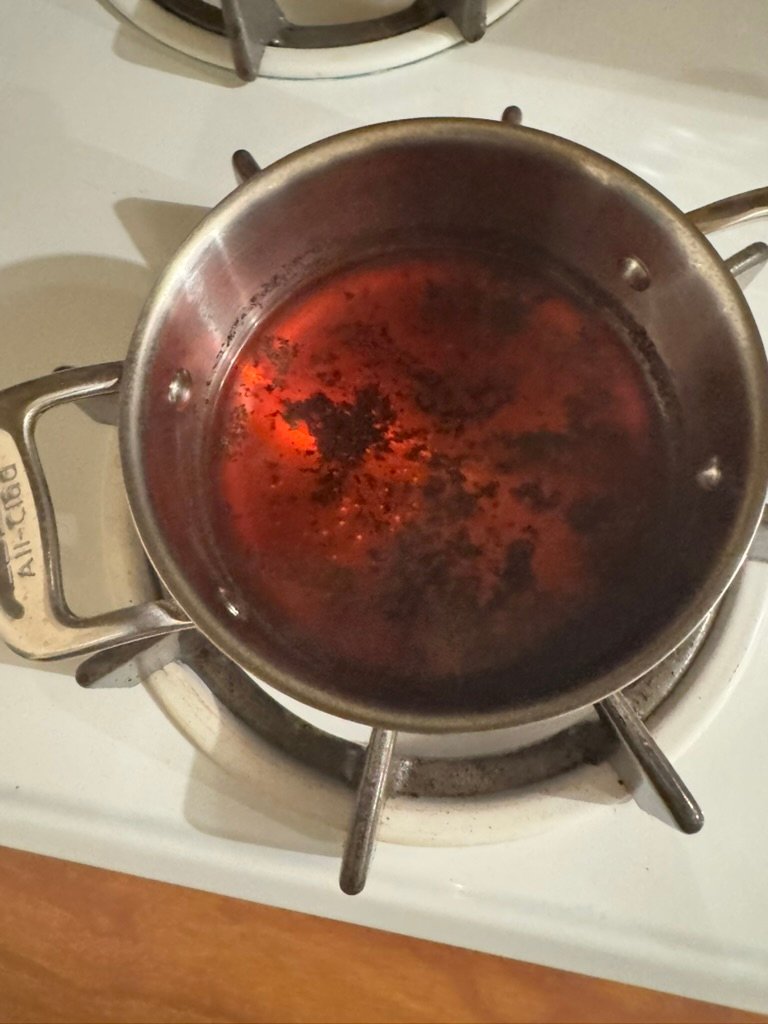
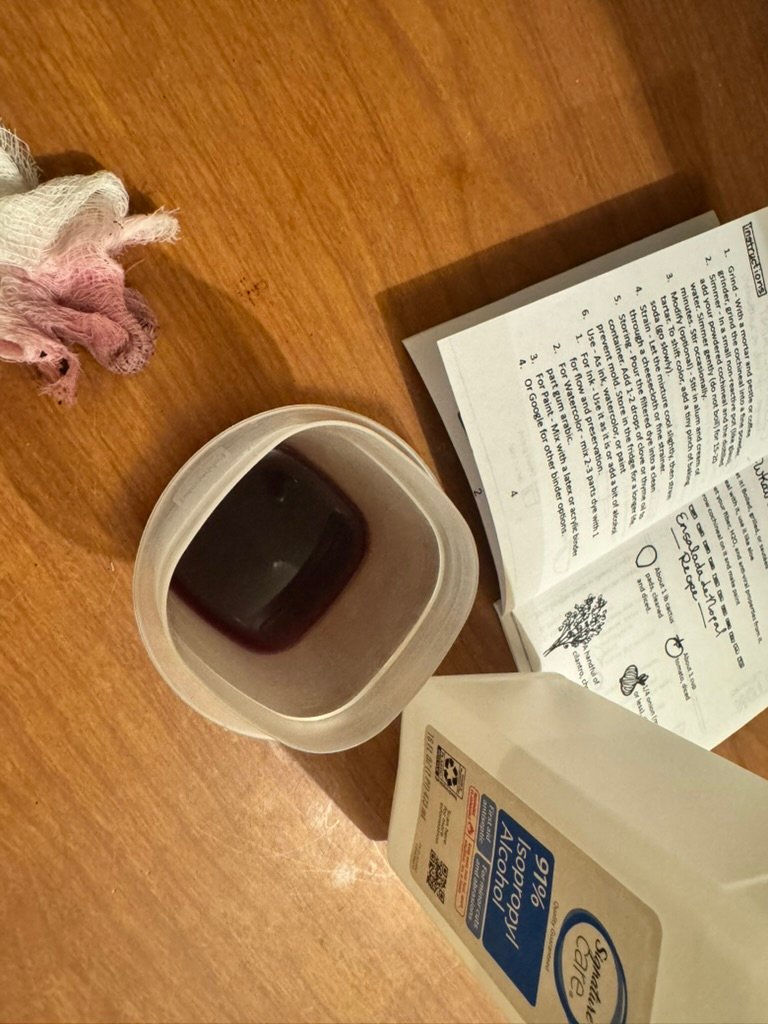
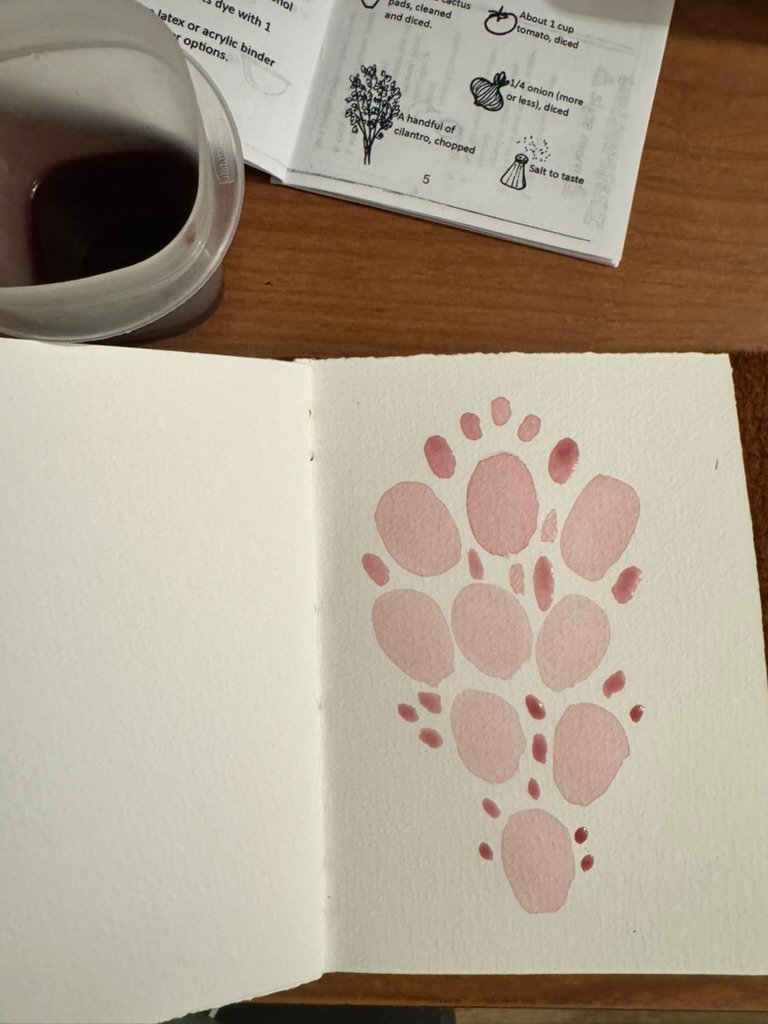
On my walk this week, I will be collecting cochineal from my neighbors’ nopales (with their permission, of course) and giving it another try.
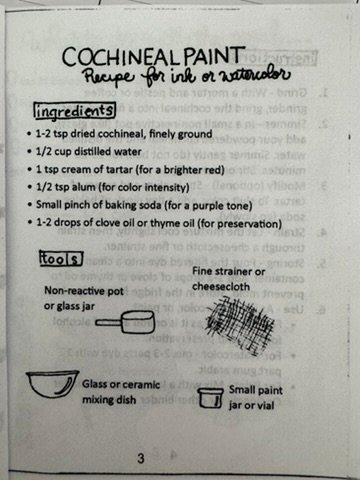
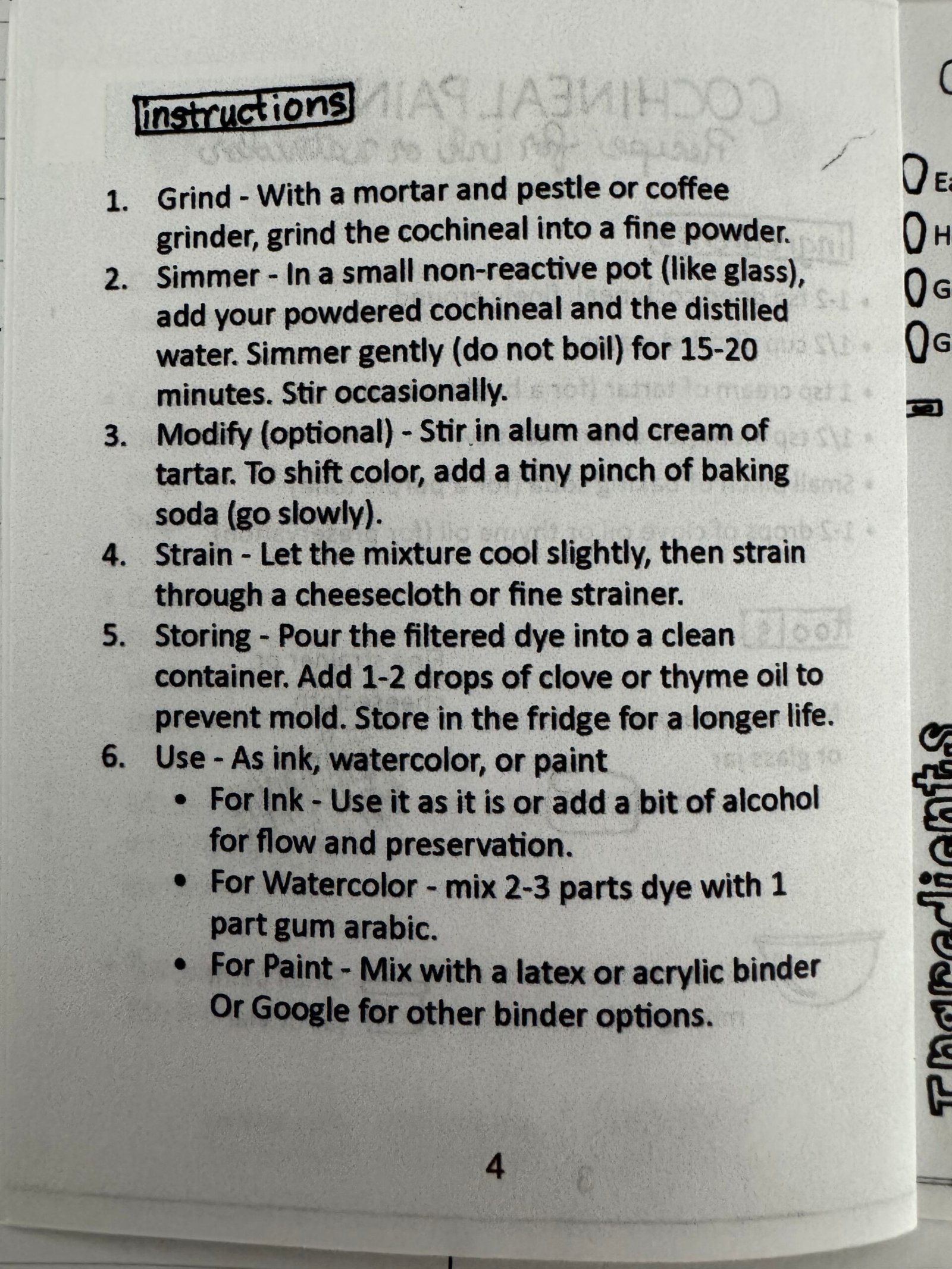
Here is the recipe, which is part of the nopal zine I have been working so arduously on and shared about. In it is the recipe for a nopal salad, a coloring page, and a little about how the cochineal became one of the best-kept secrets in history! The Nopal Zine will be ready for purchase from my shop, Miel y Papel, on June 25th, the grand opening day!
Intrigued by the history? Go to Substack and read the two parts of my latest article: The Nopal and the Cochineal: Can’t have one without the other.
What foods have you grown to love?
Share in the comments, I’d love to know!
Remember to head over to Substack and read the two parts of my latest article: The Nopal and the Cochineal: Can’t have one without the other. It’s a super fascinating read, I promise. You can also learn about its present-day use on YouTube, with videos such as this one about Grupo Nopalyecac in Puebla, Mexico.